
I’ve blogged before about letters in historical fiction (and a longer essay here) and I’m happy to report a newcomer to the list of letter-inspired authors.
Annie Elliot is almost local to me and we were put in touch late last year before Annie’s debut novel Mr and Mrs Charles Dickens: Her Story: “So the world will know he loved me once” (Envelope Books) was published.
We met again in January on the actual day of publication when Annie had copies of her new baby to show off, and a very handsome baby it is too!
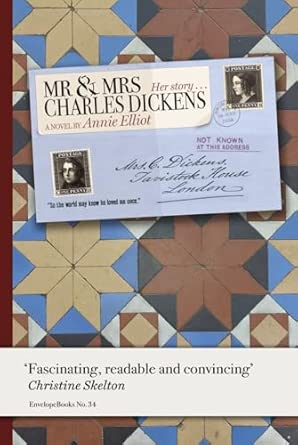
I know Annie was very much inspired by the letters written by Dickens to his wife, as well as by the hardships Catherine endured in their marriage and I was fascinated to see how the author approached this subject.
The novel begins on the day Catherine (Kate) Dickens learns of her estranged husband’s death and from then on episodes from her life with him are intercut with her reflections on those past events. At first I found this slightly disconcerting as there are no chapters as such, and Kate central to both narratives, but the time-shifts are clearly sign-posted and this arrangement adds a lot to the pace of the story. And what a story it is. If Kate’s attraction to Dickens and his enthusiastic courtship make for a conventional start, there are signs even on their honeymoon that all is not well and Kate is soon caught in the trap of dutiful wife bound to a bullying and manipulative husband, whose moods can switch in an instant from romantic and playful to plain cruel. He fathers ten children by her, (apparently her fault!) which results in her acute physical deterioration so that by her middle age she can barely move.
While immersed in Kate’s thoughts, I was often frustrated at how she apparently maintains her love for her husband in the face of his increasingly terrible behaviour. Although she does eventually stand up for herself (hurrah!) in some matters, her inner thoughts are often more assertive than her behaviour, which feels like a disconnect. Still, the reader can only be on the side of this ill-used wife whom Dickens attempts to commit to an asylum to get rid of her and whom many of his fiends supported. It’s hard to believe that at the end she still craved his love, but of course there were many happy times in the marriage of which we see less than the cruelties.
If Kate is a largely conventional heroine, her story is told in vivid colour, with bold strokes and with many comedic touches. I’m inclined to agree with the late Fay Weldon’s assessment of this book as ‘a dark novel posing as a light-hearted comedy’ and I’m sure it will stand comparison with other treatments of this fascinating subject.
I believe the book originally contained lengthy transcripts from the letters which in the end were reduced to shorter passages, but the gist of them and their effect is very clear. They include transcripts of obituaries and letters from Dickens to The Times, showing the gulf between the public persona and the private man. Catherine’s final wish that her letters should be preserved “so the world will know he loved me once” is the heart-breaking statement on which her character and the book is built.
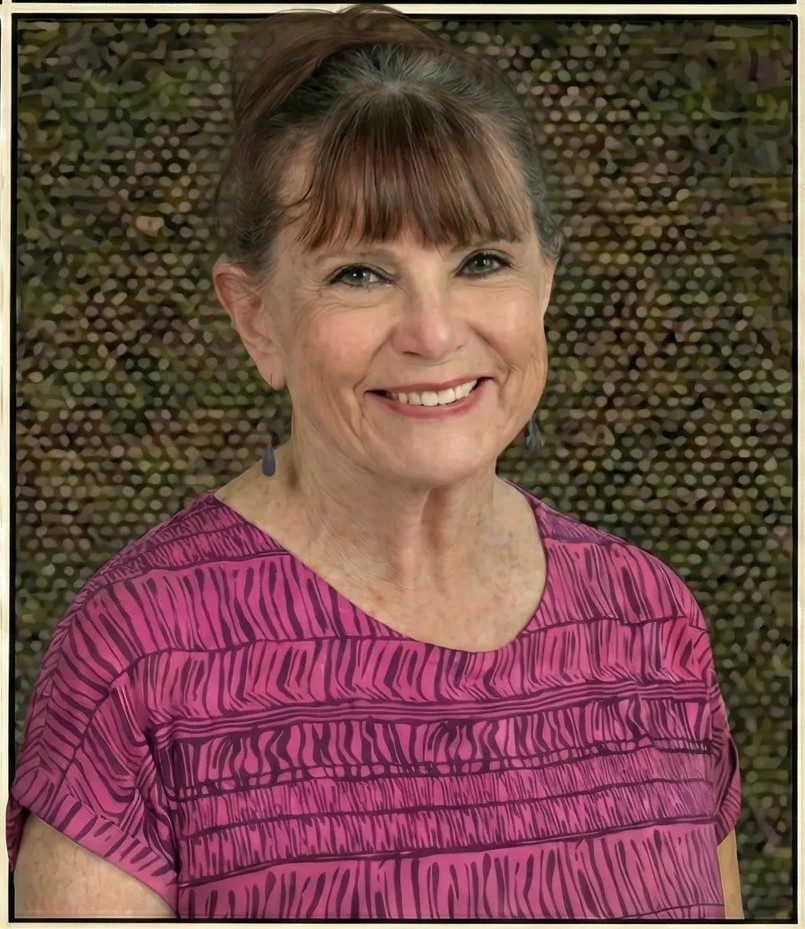
Annie ‘s main book launch is next week at the Dickens Museum in London, a hybrid event.
I have my ticket and look forward to an entertaining hour in Annie and Mrs Dickens’s company.
More events are on Annie’s website.
Mrs & Mrs Charles Dickens is available from Envelope Books or Amazon.
 Ali Bacon, Author