
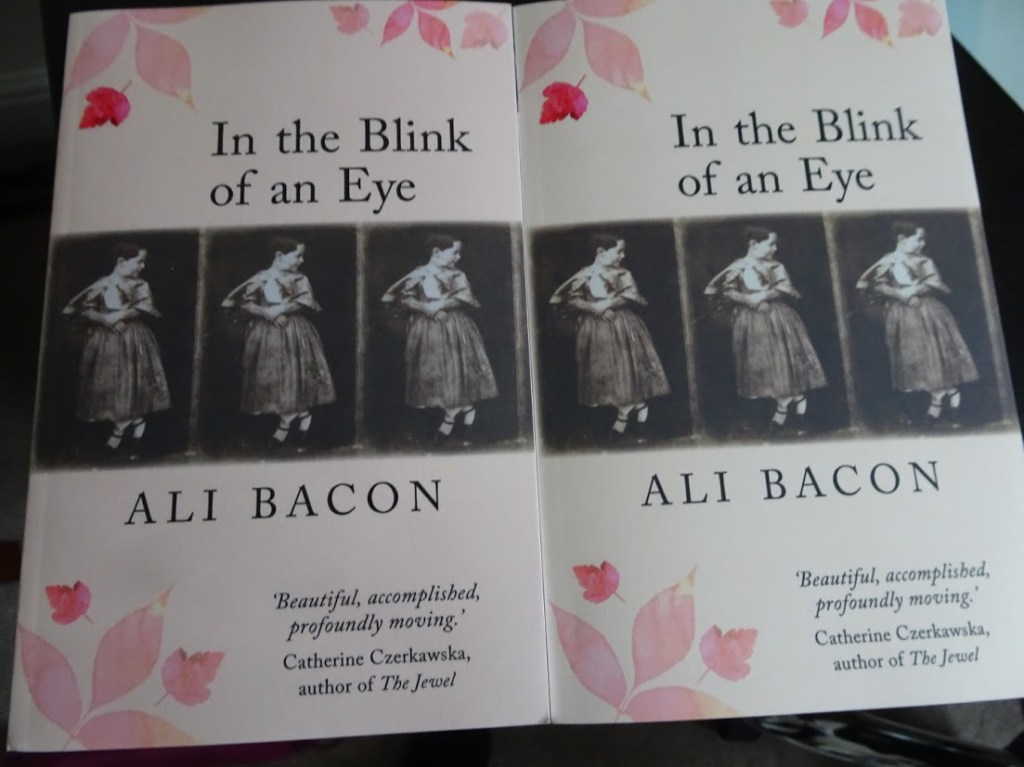
As most of you will know, when writing in In the Bink of an Eye I was careful – (some might say too careful, to those who spotted the odd gaffe not careful enough!) – to stick to ‘the facts as we know them.’ And if anyone would like a summary of the story I have retold, the bare bones of it were laid out here long before the book was written. By the way, that post (written in 2012!) is a classic case of telling the story too soon and was part of the reason for a lengthy struggle with writer’s block! But never mind that. In the Blink of an Eye in its final form added, what? character, dialogue, the occasional excursion into pure inagination. Along the way I uncovered new facets to the story, the contributions for instance of Jessie Mann, Elizabeth Rigby/Eastlake, Mary Brodie and a much fuller appreciation of Amelia Paton and her family. And generally I accommodated these new findings into the book. But the general outline of the story remained the same. I was just fleshing out the bones.
 Last week, however, I received an email which threw me into a state of confusion. During one of his many excursions into photo-history (interpret this to include visiting many graves!) Rob Douglas (pictured right at the launch of ‘Blink’ turned up something very surprising to both of us.
We were both familiar with the death certificate of Charlotte Dalgleish, D. O. Hill’s daughter. She died of ‘puerpural fever’ but neither of us had ever questioned that the child died with her and I for one regularly tell people that D. O. Hill had no direct descendants. Rob, however pointed me to an ancestry site which showed quite clearly that Chattie’s son, Charles Hill Dalgleish, survived until 1918 and had a family of his own.

I’m still disentangling the ways in which this took me aback. First of all, I wanted to know, are there direct descendants still alive? (It looks like not, but who knows, that opinion may also have to be revised.) Secondly, how does this change my perception of Hill and his story? The tragedy of Chattie’s death is no less affecting, but it seems odd that, as far as I know, the infant was never mentioned in any source nor named directly in Hill’s will. Maybe there was something I missed. But even if this fact was hidden too deep to be uncovered, does it make In the Blink of an Eye just plain wrong?
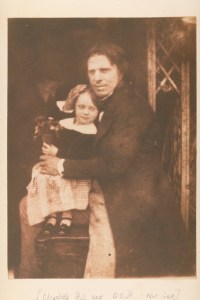
Yes, there are two spearate sentences in the book (Ch 16 and 17) which mention the loss of Charlott’es child. All the same, I can’t say his survival, had I known about it, would have led me to change much else. After all, the boy didn’t seem to figure in the stories Hill and his circle left to us. It’s a pity I didn’t know about Charles Hill Dalgleish but if his life made a little dent in mine last week I don’t think it requires me to throw the book on the historical scrap heap.
Of course that’s because the book isn’t actually history!
In a week when I was due to discuss the blending of fact and fiction with a writer friend as part of Tetbury Writers at the Goodshed series, this sudden find didn’t make me want to rewrite the book, just some of my previous thoughts on the perilous process of biographical fiction.
I concluded that I have probably taken the whole historical veracity thing a bit too seriously. We do our best, but history is rewritten all the time. The fiction we create around it is influenced by our own story as much as that of our subjects. As I concluded last week, how much can I say is ‘true’ of In the Blink of an Eye when I made up (almost) every word!

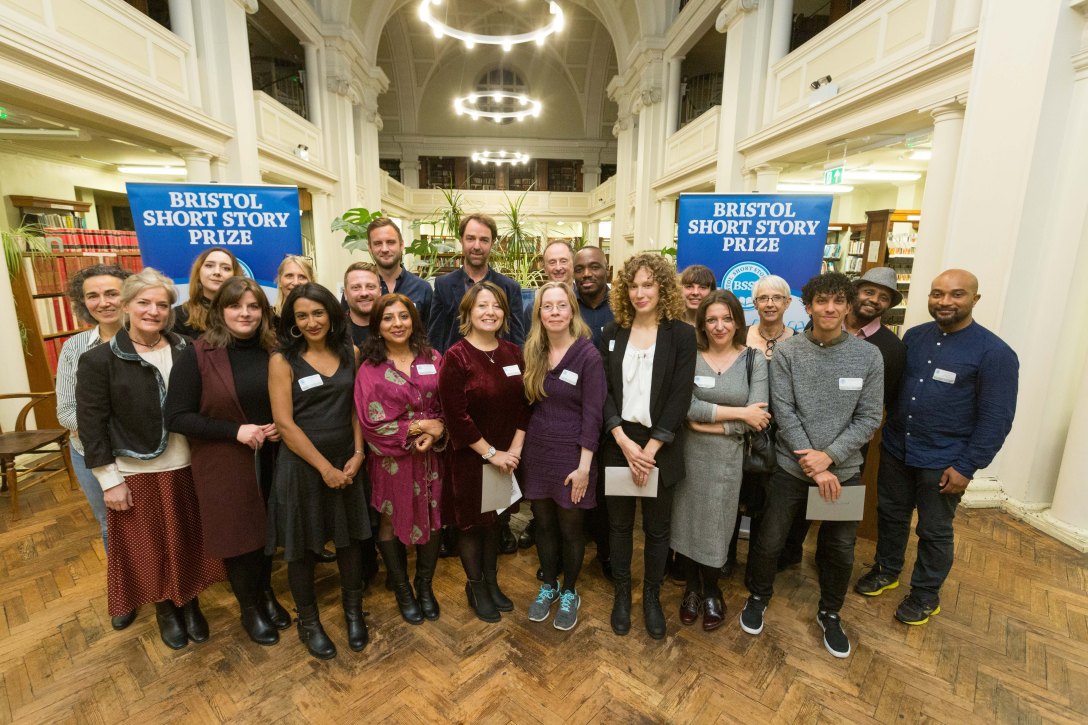
The prize, by the way was for something completely different, although also historical. When my short story Within these Walls, inspired by an 11th century manuscript, made the shortlist of Bristol Short Story Prize, I was disappointed but philosophical – just making the longlist was better than I had ever done before. Then a week or so ago I had an email to say I was the inaugural winner of the Sansom Prize for the best entry by a local author. This was a wonderful surprise. The presentation evening (overall winner Cameron Stewart) was a lovely occasion and it was an absolute privilege to receive the prize from Angela Sansom, co-founder of Redciffe Press.
Here’s to history in all its forms!
 Ali Bacon, Author