
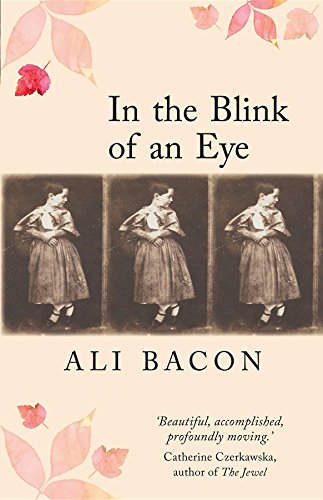
As soon as Sara Sheridan’s The Secrets of Blythswood Square crossed my radar I pounced on it as it’s a novel which springs from the exact scenario (and some of the characters) I drew on for In the Blink of an Eye. Coincidentally in the same week Sally Magnusson’s Music in the Dark was a kindle offer I couldn’t refuse and it also begins in Scotland in the heroine’s childhood during the 1840s. In fact although each of these novels enlarged my vision of the time and place, they did so in very different ways.
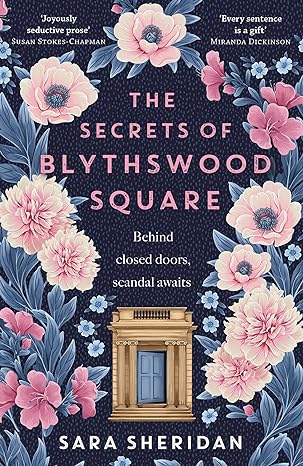
I have to say Blythswood Square (full review here) is an absolute blast. Did Hill and Adamson have a young assistant who upped sticks and set up a studio in Glasgow? Most likely not but that’s not the point, they could have, and Ellory is more than up for the challenge of running a business in what was very much a man’s world. It’s soon clear she will form an ‘unlikely’ friendship with Charlotte, a member of the gentry, whose father has just died and left half of his estate to a mystery woman so that her life of comfort and privilege is under threat. Around these two is a terrific cast of characters, all wonderfully colourful and bringing to life all facets of Glasgow, a town reaching its Victorian zenith, which the author depicts in hugely affectionate detail. Add to this the attention to social and political issues of the time, especially the plight of women throughout society, and we have a heady and slightly subversive mix of history and fiction backed up by extensive research.

If Blythswood Square is an orchestral blast, Music in the Dark is more of a lyrical elegy dealing with the Highland Clearances (the flip side of burgeoning urbanisation) and their aftermath. We meet our heroine Jamesina (women in her community were given men’s names, so no Ellory’s here!) ) eking out an existence as a washerwoman in Rutherglen just outside Glasgow. When a new lodger presents himself she is well aware they knew each other in a past life but, physically and mentally scarred by that past, she is loath to reveal herself until Niall makes the connection himself. What will probably persist in my mind are the chapters depicting Jamesina’s early childhood in a highland glen when she was taken under the wing of the schoolmaster who instilled a love words (especially Latin!) which she has carried with her all of her life. Back then she pictured her future as a poet or songstress. What really happened were violent of evictions by government troops of one glen after another, then a marriage which left her little better off. Niall, whos family like so many others emigrated to the U.S.A., gives us another hisotrical persective. The story is harrowing but it shows how as Jamesina and Niall form a tentative union, so that some, if not all, of her wounds can heal.
So what a joy to see such different sides of Scotland, and two very different heroines (one feisty and impulsive, the other damaged and vulnerable) who illustrate how women could, or might have, left their mark.
I’d be hard picked to choose a favourite.
And just a reminder of an alternative. Still available!
 Ali Bacon, Author
Ali, Thanks for the heads up (getting modern!) re- the two books. They both sound great. I’ll search them out.
From Jean B
LikeLike