

It’s been quite a few years since I started writing The Absent Heart (and two years since I visited RLS’s former home!) and the vast proportion of the hours I’ve spent with it have been in rewriting, but then as Robert Graves said, ‘There is no such thing as good writing, only good rewriting’, an opinion echoed by many ‘greats’ including Hemingway and Updike. However there comes a point with any book when editing begins to feel fruitless, pointless tinkering with a something that is basically done, and I recognised this point earlier this year, when I wrapped up my novel and began a new round of submissions to editors and agents.
So why am I still editing? Basically every round of editing is different. Many of the rewrites I did before submitting the book were in the form of structural editing; changing the point of view, developing a character or making another less prominent, tweaking the plot to tighten the story arc. Even while this is going on of course, more detailed editing takes place. By the time the book was finished some scenes were so familiar I felt no need to ever see them again. Or as writer AJ West was tempted to respond when asked to read an excerpt from his work at an event, ‘Read from it? If you like I could recite the whole book by heart!’
Familiarity of course is the problem. I’ve seen some sentences so many times my eye glides over them. Linen Press, on the other hand, see everything with a fresh eye, which is exactly what’s needed. They pepper my MS with comments and suggestions which in most cases I can’t believe I didn’t see for myself. ‘What are you trying to say?’ I’m sometimes asked about some of my favourite sentences. I look again and think, yes, what did I mean exactly?
What surprises me more is that despite it’s being only a few months since I completed my final draft, I’m now seeing it afresh. It’s actually enjoyable finding the word I probably meant to use in the first place and somehow didn’t (the mark was indelible not irrefutable, obvs! – and could her emotions jangle in her head? I don’t think so!) My fresh eye (or ear) picks up other things – do I need the dialogue to be quite so formal as it sometimes is? Did Victorians really use quite so many words? Could descriptions be more precise? (Those ‘trees’ by the pond, surely they were willows?) In some places I want a more interesting word (‘dismantle’ for ‘take down’) and in others I’d rather the word sank into the background (‘decided’ rather than ‘fixed on’)
Yes it’s laborious and in some respects nit-picking, but the accumulation of these small changes makes a big difference to a polished finished product and so this is reward enough.
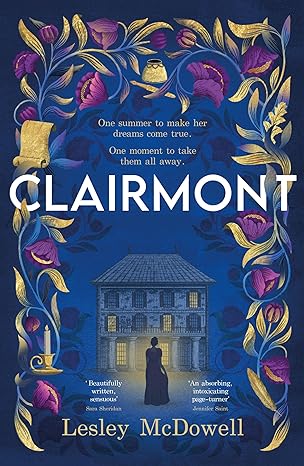
Meanwhile I’m reading another novel about a muse largely ignored by history. Lesley McDowell’s Claire Clairmont is a very different proposition to Frances Sitwell but equally fascinating. Stand by for a review in a future post.
Don’t forget I’m issuing a monthly newsletter about characters in and background to the novel. You can sign up here to ‘Beyond the Book’ AND receive a bonus chapter!
 Ali Bacon, Author
Writing is at best ‘un dur plaisir’; but editing, as you say, is a delight—the pleasures of shaping, perfecting, making a small change and getting it just right, the pleasure of an idea for an improvement suddenly occurring—and all done with a print-out and a pencil in a favourite chair or travelling by train.
LikeLike