
This article is the third in my newsletter series ‘Beyond the Book’. If you’d like to read future issues as they come out, please sign up here.
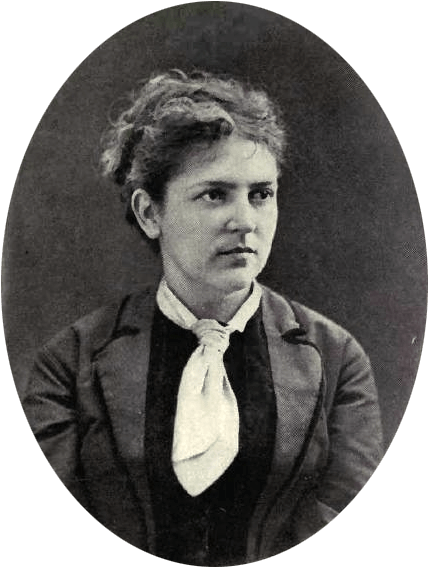
When Louis Stevenson met Fanny Osbourne, as she then was, she was emotionally fragile, distancing herself from a philandering husband and mourning the death of a child. However, the woman we see in biographies and letters is robust and determined. In early versions of The Absent Heart, she didn’t make much of an entrance until close to the end, but as time went on, I recognised that here was someone to whom, in the words of her husband, love her or hate her, indifference was impossible. As a result, she has grabbed quite a bit more of the action than originally planned.
For anyone familiar with my heroine Frances Sitwell, the parallels between her and Louis’s wife are obvious. Apart from having the same name (the novelist’s nightmare!) both of them were considerably older than Louis, and both had already experienced marriage, motherhood and loss. But to be honest, these superficial similarities are less striking than the differences. If Frances was at pains (as I see it) to avoid controversy, Fanny, before, during and after her life with Louis, was always ready to flout convention. To me one of her most remarkable decisions was, at the age of twenty-three, to leave her home in Indianapolis with her four-year-old daughter to join her first husband Sam on a mining concession in in Nevada, travelling by New York and Panama, sometimes on foot and very short of cash. If that’s not pioneering spirit, I don’t know what is. As Margaret Forster observes in her biographical study Good Wives, Fanny Stevenson had guts!
In fact, before The Absent Heart was even conceived, I considered Fanny as the subject of a novel and read her sister’s favourable but fascinating biography The Life of Mrs Robert Louis Stevenson as well as Nancy Horan’s novel Under the Wide and Starry Sky. Add to these the appraisals of Stevenson biographers, and as soon as I began to write her in, I realised I had a very clear impression of Fanny as a character.
Then a few weeks ago, I spotted the new A Wilder Shore by Camille Peri, subtitled The Romantic Odyssey of Fanny and Robert Louis Stevenson. For a moment I took this for fiction but it is in fact a combined biography of man and wife. Quite an undertaking! Camille Peri is ‘an author and journalist who founded the ground-breaking website Mothers Who Think’ and makes no bones over wanting to restore Fanny to her rightful place in Louis’s creative life and to highlight her achievements as a writer.
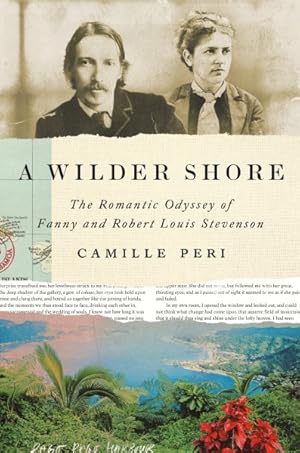
I’m only a third of the way through what is a hefty tome, but so far the book is certainly thorough and written with verve, and who could disagree with Peri’s conclusion that ‘Without Fanny, there would be no Robert Louis Stevenson as we know him.’ Peri also has a directness that appeals to me in her summing up of Louis and Mrs Sitwell. ‘If this was a son’s love for a mother, it was decidedly Oedipal,’ (touche!) and she has won a place in my heart by including in her description of the young Louis’s Edinburgh a reference to David Octavius Hill, subject of my novel In the Blink of an Eye.
As I progress through the book, there’s clearly a huge overlap with Stevenson biographies and I’ll have to judge later how much of a new spin Peri has put on the narrative, but a biography of Fanny I came to recently and can definitely recommend is Margaret Mackay’s The Violent Friend, which takes its title from a letter from Louis to J. M. Barrie in which he describes Fanny as ‘a violent friend, a brimstone enemy … Is always either loathed or slavishly adored…’
There isn’t a shadow of doubt that Louis and Fanny were deeply in love, but the marriage was subject to many strains and stresses, and it’s generally accepted that their relationship was less intimate in the Samoa years when Fanny fell prey to physical and mental ailments. Perhaps, as J. C. Furnas’s biography Voyage to Windward (one of my favourites!) suggests, Fanny’s mission was to keep Louis alive and writing, but as he began to thrive and establish himself in society, she lost her sense of purpose. This is not to diminish the depth of feeling between them or how much Louis owed to the partner he celebrated as ‘Tiger and tiger lily’.
I’ve barely scratched this surface of this charismatic and sometimes contradictory woman who, as Peri reminds us, loved cooking and gardening but could equally handle a gun, so if you’d like to follow up on Fanny Stevenson, here are the books I’ve mentioned with the addition of Alexandra Lapierre’s biography which I’ve recently acquired, its title another indication of this complex character.
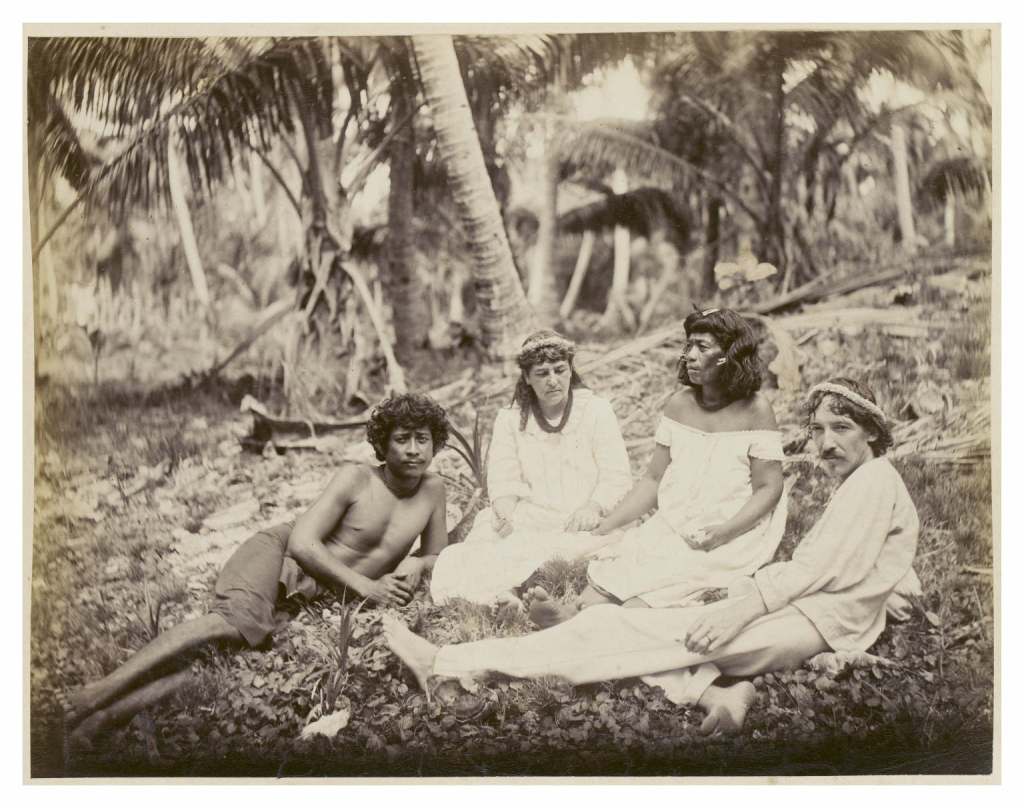
(Last image shows the Stevensons in the 1890s with islanders of Butariti from https://robert-louis-stevenson.org/rls-in-south-seas/)
More about ‘Mrs RLS’
Forster, Margaret, Good Wives, Vintage, 2002
Furnas, J. C. Voyage to Windward, Faber & Faber 1952
Horan, Nancy, Under the Wide and Starry Sky, Ballantine, 2014
Lapierre, Alexandra, Fanny Stevenson, Muse, Adventuress, Romantic Enigma, translated C. Cosman, Fourth Estate, 1995
McKay, Margaret, The Violent Friend, Dent, 1969
Peri, Camille, A Wilder Shore, Viking, 2024
SANCHEZ, Nellie Van de Grift, The Life of Mrs Robert Louis Stevenson, Scribner, 1920


Yes… seems there’s a whole lot to say about her. Horan’s book was, in my opinion, overly detailed, but not too bad. That was, I think, enough for me. She was an interesting person.
LikeLiked by 1 person
Hello, yes, the Horan version is very informative but didn’t entirely engage me on an emotional level. When it comes to biographical fiction there are other writers I prefer. (Paula McLain, Dawn Tripp!)
LikeLiked by 1 person
Her Loving Frank was excellent, though. But I too have many historical, biographical fiction authors I prefer!
LikeLiked by 1 person